
Low Pressure Casting Technology for Aluminum Alloy Cylinder Heads
Author: SAIVS Date Published: Jan 12,2026
Lightweight design has become a core direction in passenger car engine development.
Reducing vehicle weight directly improves fuel efficiency and lowers emissions.
Among structural components, the engine cylinder head plays a critical role in thermal management and combustion efficiency.
As a result, aluminum alloy cylinder heads have become the standard solution in modern passenger car engines.
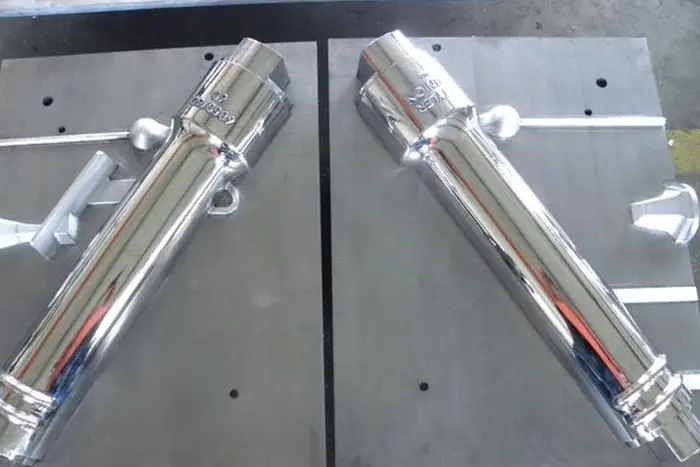
Importance of Low Pressure Casting for Cylinder Heads
Aluminum alloy cylinder heads can be produced by several casting methods.
Metal mold gravity casting and low pressure casting are the two mainstream technologies used worldwide.
Compared with gravity casting, low pressure casting allows molten aluminum to fill the mold under controlled pressure.
This significantly improves internal density, reduces porosity, and enhances mechanical properties.
Low pressure casting is widely adopted in high-performance engine applications due to its stable quality and high yield.
This process is especially suitable for complex cylinder head structures with multiple internal channels and thin-wall sections.
Advantages Over Gravity Metal Mold Casting
The main advantage of low pressure casting lies in pressure-assisted filling and directional solidification.
Molten aluminum rises smoothly from the bottom of the mold, minimizing turbulence and oxide inclusion.
Solidification under pressure improves feeding efficiency and reduces shrinkage defects.
For automotive manufacturers and parts suppliers, these advantages translate into higher consistency and reduced rework rates.
This makes low pressure casting a preferred technology for mass production of aluminum alloy cylinder heads.
Key Process Design of Low Pressure Casting
Gating System Design
The gating system of an aluminum alloy cylinder head typically adopts a riser tube with multiple gates.
This multi-gate configuration ensures balanced filling and uniform temperature distribution.
For four-cylinder heads, two-gate and four-gate systems are commonly used depending on mold layout.
Proper gate positioning near the combustion chamber area helps control solidification order.
This reduces hot spots and improves feeding efficiency in critical sections.
Alloy Selection and Melt Treatment
Common aluminum alloys for cylinder heads include Al-Si-Cu series such as ZL105 and ZL107.
When higher elongation and corrosion resistance are required, ZL101 or ZL104 can be selected.
Melt quality directly determines casting performance and final properties.
Standard refining operations include argon gas rotary degassing, strontium modification, and Al-Ti-B grain refinement.
These treatments improve fluidity, reduce hydrogen content, and refine the microstructure.
Pouring Process Control
Mold Maintenance and Surface Coating
Regular mold maintenance is essential for stable production and extended mold life.
Cleaning is typically performed after every 500 to 700 castings.
This prevents coating buildup, aluminum adhesion, and vent blockage.
Before pouring, molds are preheated to around 200℃ and coated evenly.
General coating thickness is controlled between 0.1 and 0.2 mm.
High-precision areas such as combustion chambers require thinner coatings for surface accuracy.
Filtration and Temperature Control
Filters installed in the riser tube prevent oxide inclusions from entering the cavity.
Simple galvanized metal mesh filters are widely used due to their low cost and effectiveness.
Molten aluminum temperature is typically controlled between 680℃ and 730℃.
Temperature deviation during production should be kept within ±20℃.
Stable temperature control is critical to prevent internal defects and surface imperfections.
Cooling Strategy and Solidification Control
Directional solidification is a key feature of low pressure casting.
Cooling channels are arranged in the upper and side molds to control temperature gradients.
Both water cooling and air cooling systems are used, with independent channel control.
Indirect cooling is preferred to protect mold life. Direct cooling is applied only in thick sections where rapid heat extraction is required.
Temperature-controlled cooling using thermocouples provides higher accuracy than time-based control.
Pressurization and Mold Release Parameters
Pressurization Time and Pressure Curve
Pressurization time refers to the period from filling to gate solidification.
It is usually controlled between 2 and 8 minutes depending on cylinder head weight and temperature.
Optimized pressurization improves feeding and internal quality.
The pressurizing pressure directly affects molten metal flow behavior.
Excessive pressure can cause coating damage and sand core penetration.
Therefore, precise pressure curve control is essential for defect-free castings.
Mold Release Timing
Mold release time is typically set to about one third of the pressurization time.
If released too early, the casting may deform.
If released too late, sticking and surface damage may occur.
A staged mold opening sequence improves cooling efficiency and reduces deformation risk.
Quality Control and Industrial Value
Low pressure casting technology offers high production efficiency and excellent internal quality for aluminum alloy cylinder heads.
Advanced process simulation and parameter optimization further enhance consistency.
saivs supports automotive manufacturers with reliable aluminum casting solutions tailored for engine applications.
By combining optimized alloy selection, precise pressure control, and intelligent cooling systems, manufacturers can achieve stable mass production.
This provides strong support for high-efficiency, low-emission passenger car engines.
Why Choose SAIVS™ as Your Supplier?
1.Superb Quality Control Management
At SAIVS, we take pride in our perfect quality management systems and procedures, which guarantees the excellent performance of all our producs, being a professional Investment Casting | Die Casting| Sand Castingmanufacturer in China.
2.Rich Production Experience
With 20 years of experience in production, SAIVS has a deep understanding of the market and trends, and strives for continuous research and innovation. This has created advantages in both the product's performance and appearance.
3.Competitive Prices
As a Chinese factory committed to becoming the most cost-effective Investment Casting | Die Casting| Sand Castingexporter in China, SAIVS provides high-quality products at advantageous prices. By lowering costs and increasing efficiency, we ensure that our customers receive the best possible value for their investment.
4.Perfect After-sales Service
At SAIVS, we strive to provide superior customer service that meets and exceeds expectations. We are always available for any questions or concerns you may have, and we stand by our commitment to providing excellent after-sales support.
Related Posts
-
Complete Guide to Metal Manufacturing Methods: Die Casting, Forging, Machining and More
Comparing Common Metal Manufacturing Processes: Die Casting, Forging, Machining & MoreMetal parts production relies on a variety of manufacturing technique
-
Why Aluminium Die Casting Is Widely Used in Automotive, Electronics, and Industrial Manufacturing
Why Aluminium Die Casting Is Essential for Modern Industrial ManufacturingAluminium die casting has become one of the most important manufacturing technolo
-
Aluminum Alloy Die-Casting Molds:How To Extend Service Life
Extending the service life of die-casting molds is of utmost importance due to several reasons:1. Cost Efficiency: Die-casting molds are a significant investmen...
-
The Six Key Benefits of Lost Foam Casting
In the ever-evolving landscape of manufacturing, selecting the right casting method is crucial for efficiency and cost-effectiveness. Lost foam casting has
-
How Printing Choices and Design Enhance the Strength of Your 3D Prints
This passage discusses factors that influence the tensile strength of 3D printed parts.
-
Die Casting Quality: How to Master Materials?
In the intricate domain of die casting production, the pursuit of unparalleled product quality necessitates a comprehensive and meticulous approach to alum



