
Metal Casting Process Guide | Choose The Right Casting Method For Custom Parts
Author: SAIVS Date Published: Oct 30,2026
Metal Casting Process Guide: How to Choose the Right Casting Method for Your Custom Parts
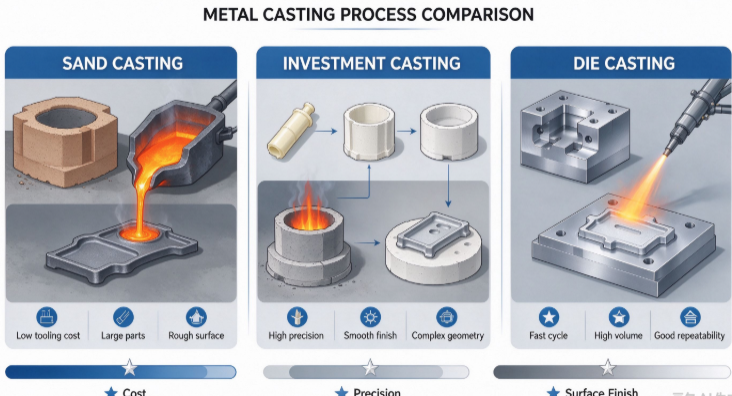
Keywords: custom metal casting, precision casting parts, casting manufacturer
Word count: 862
Metal casting remains one of the most reliable manufacturing methods to produce complex metal components for industrial, automotive, machinery and energy sectors. When engineers and procurement teams source custom cast parts, selecting the right casting process directly impacts cost, dimensional tolerance, surface finish, lead time and material options. This guide breaks down mainstream casting technologies, their pros and cons, typical applications, and key factors to help you pick the best solution for your project.
What Is Metal Casting?
Metal casting is a manufacturing process where molten metal is poured into a prefabricated mould cavity. After cooling and solidification, the metal takes the shape of the cavity to form a finished or semi-finished casting. Compared with CNC machining, Forging or stamping, casting excels at making parts with internal cavities, irregular geometry and large sizes that are hard to produce by other methods. Today’s modern foundries combine traditional casting know-how with digital pattern making, simulation software and strict non-destructive testing to deliver consistent, high-quality custom castings.
Main Types of Casting Processes
Sand Casting
Sand casting is the most flexible and cost-effective casting process. It uses sand as the mould material, and molten metal fills the cavity under gravity. It supports almost all ferrous and non-ferrous alloys, including cast iron, carbon steel, stainless steel, aluminum and bronze. It works well for both small batches and large heavy castings such as pump housings, valve bodies, machine bases and Agricultural Machinery Parts.
- Advantages: Low mould cost, unlimited part size, flexible for prototype and low-volume orders
- Limitations: Relatively rough surface, wider tolerance range, more machining allowance
Investment Casting (lost wax casting)
Investment casting, or lost wax casting, belongs to high-precision casting. Wax patterns are assembled, coated with ceramic slurry, dewaxed and sintered to form a one-piece ceramic mould. It delivers fine surface quality and tight dimensional accuracy, greatly reducing secondary machining work. It is widely used for aerospace, petroleum equipment, medical and food machinery components.
- Advantages: Excellent surface finish, complex thin-wall structures, high material integrity
- Limitations: Higher unit cost, longer lead time for mass production
Die Casting
Die casting injects molten alloy under high pressure into reusable steel dies. It is the preferred process for high-volume aluminum, zinc and magnesium alloy parts. Automotive structural parts, motor housings, electronic enclosures and hydraulic valve blocks are typical die-cast products.
- Advantages: Fast cycle time, stable repeatability, good surface finish
- Limitations: High mould investment, mainly for low melting point non-ferrous alloys
Key Factors to Select a Casting Process
Before sending an RFQ to a casting manufacturer, evaluate these factors together with your engineering team:
- Material: Cast iron, steel, aluminum, brass or special alloy
- Order volume: Prototype, small batch or mass production
- Part size and weight: Small precision fittings or large heavy equipment castings
- Dimensional tolerance and surface requirements
- Post-processing: CNC machining, heat treatment, shot blasting, painting or passivation
- Budget and delivery schedule
Many buyers make the mistake of choosing the cheapest process blindly. A low-cost casting may lead to extra machining cost, high rejection rate and delayed delivery. A professional casting supplier will recommend the most balanced process after reviewing your 2D drawings, 3D files and working conditions.
Quality Control Standards for Custom Castings
Reliable foundries implement full-process quality control: raw material spectrum inspection, mould simulation, first article inspection, dimensional checking, heat treatment control, and NDT including UT, MT, PT and X-ray. Certifications such as ISO 9001 are common guarantees for stable casting quality. If your parts work under high pressure, corrosion or high-temperature environments, you need to specify material standards and testing requirements in advance.
Why Work With A Professional Custom Casting Manufacturer
Partnering with an experienced casting factory brings more than finished parts. Our engineering team provides DFM (Design for Manufacturability) suggestions at the early stage, optimizes gating system, reduces casting defects and saves your overall production cost. We support OEM and ODM custom casting services, covering sand casting, investment casting and die casting for machinery, hydraulic, automotive and energy industries. Whether you need one-off prototypes or bulk serial production, we can match the suitable process and quotation.
FAQ
Q: Can you cast parts from my STEP or STL files?
A: Yes. We accept 3D models and 2D engineering drawings to review feasibility, make patterns and start casting production.
Q: What alloys do you supply for casting?
A: We support gray iron, ductile iron, carbon steel, stainless steel, aluminum alloy, brass and bronze castings.
Q: Do you offer CNC machining and surface treatment after casting?
A: Yes, we provide one-stop service including machining, heat treatment, shot blasting, coating and assembly support.
Get Your Custom Casting Quote Today
If you are looking for a trusted casting manufacturer for your custom metal parts, send us your drawings and requirements. Our technical team will review your project and provide a competitive quotation within 2 working days.
Why Choose SAIVS™ as Your Supplier?
1.Superb Quality Control Management
At SAIVS, we take pride in our perfect quality management systems and procedures, which guarantees the excellent performance of all our producs, being a professional Investment Casting | Die Casting| Sand Castingmanufacturer in China.
2.Rich Production Experience
With 20 years of experience in production, SAIVS has a deep understanding of the market and trends, and strives for continuous research and innovation. This has created advantages in both the product's performance and appearance.
3.Competitive Prices
As a Chinese factory committed to becoming the most cost-effective Investment Casting | Die Casting| Sand Castingexporter in China, SAIVS provides high-quality products at advantageous prices. By lowering costs and increasing efficiency, we ensure that our customers receive the best possible value for their investment.
4.Perfect After-sales Service
At SAIVS, we strive to provide superior customer service that meets and exceeds expectations. We are always available for any questions or concerns you may have, and we stand by our commitment to providing excellent after-sales support.
Related Posts
-
Metal Casting Process Guide | Choose The Right Casting Method For Custom Parts
Compare sand casting, investment casting and die casting. Learn how to select custom metal casting processes and get reliable precision casting parts from our c...
-
Aluminium Casting Vs. Steel Casting: Which Alloy Is Right For Your Product
Introducing Green Sand CastingCasting products are used in a variety of industries, making casting an important manufacturing process. Many of these products ar...
-
How digital microscopy can optimize the sand casting process
Sand casting is an important process for manufacturing metal parts, but the quality of castings is often affected by various defects. Common defects includ
-
3 Casting Types of Corrosion Resistant Metals
In the world of metal casting, different metals and alloys have varying resistance to corrosion. Selecting the perfect material for your project is a critical d...
-
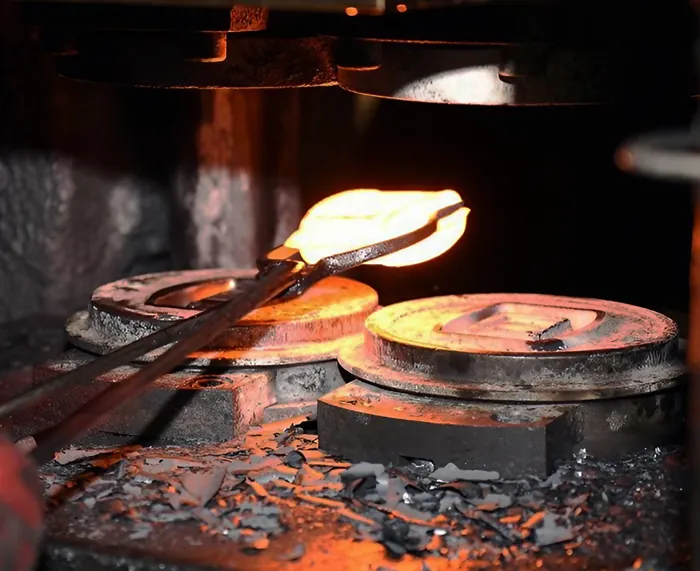
Forging vs. Machining: A Comprehensive Comparison
Forging and machining are two fundamental industrial processes that shape and manufacture metal parts. Each process has advantages and disadvantages, makin
-
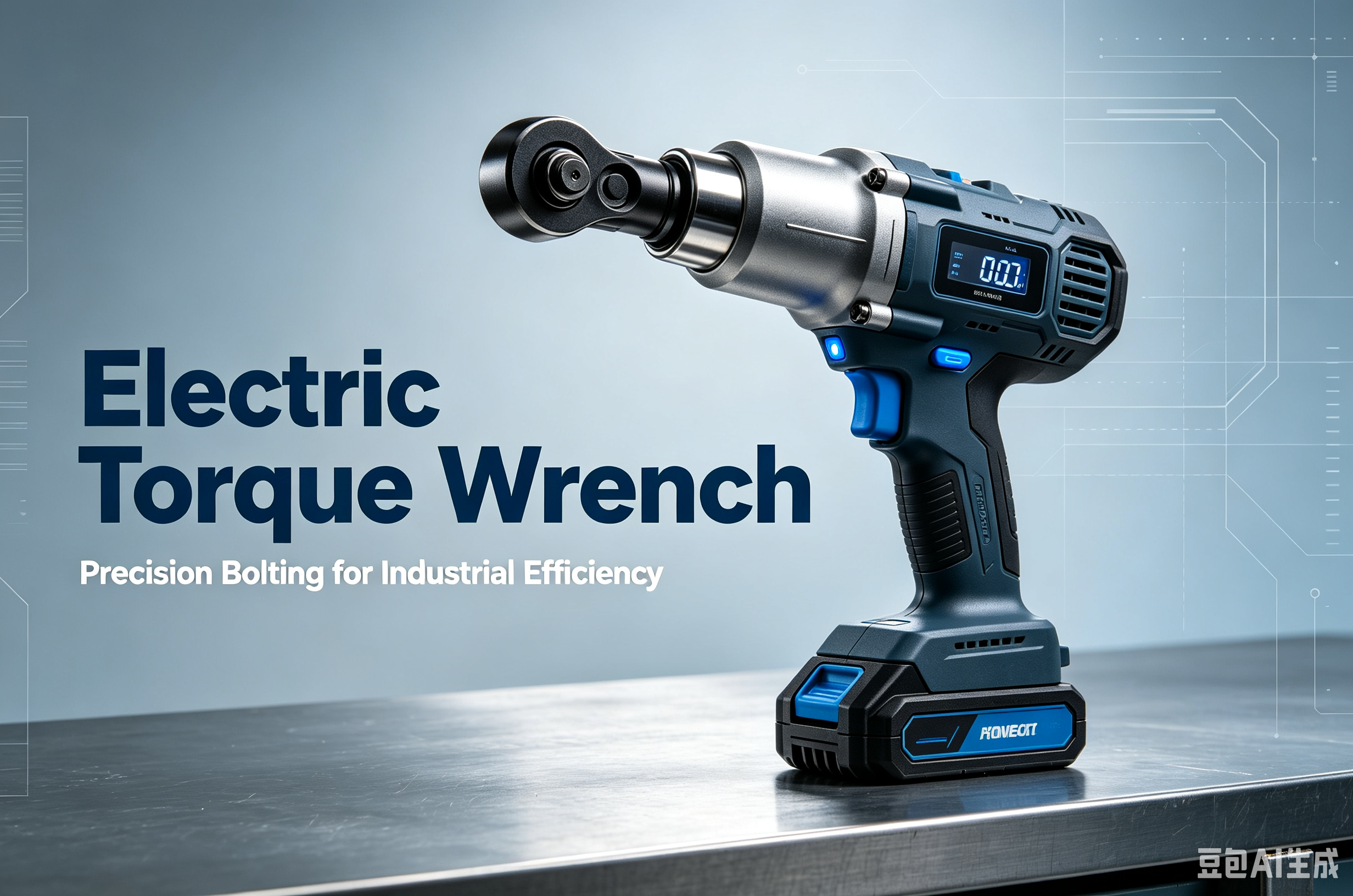
Electric Torque Wrench: Precision and Efficiency for Industrial Bolt Fastening
Electric Torque Wrench: Precision and Efficiency for Industrial Bolt FasteningKeywords: Electric torque wrench, precision bolting, industrial fastening too



