
CNC vs. Rapid Prototyping: Which Machining Process is Right for You?
Author: SAIVS Date Published: Mar 31,2025
CNC vs. Rapid Prototyping: Choosing the Best Machining Process for Your Needs
In the fast-evolving world of manufacturing, choosing the right machining process can significantly impact the quality, efficiency, and cost-effectiveness of production.
Two leading technologies, CNC (Computer Numerical Control) machining and RP (Rapid Prototyping), offer distinct advantages depending on the requirements of the project. Understanding these differences will help businesses select the most suitable option for their manufacturing needs.
Material Versatility
One of the key factors in manufacturing is material selection.
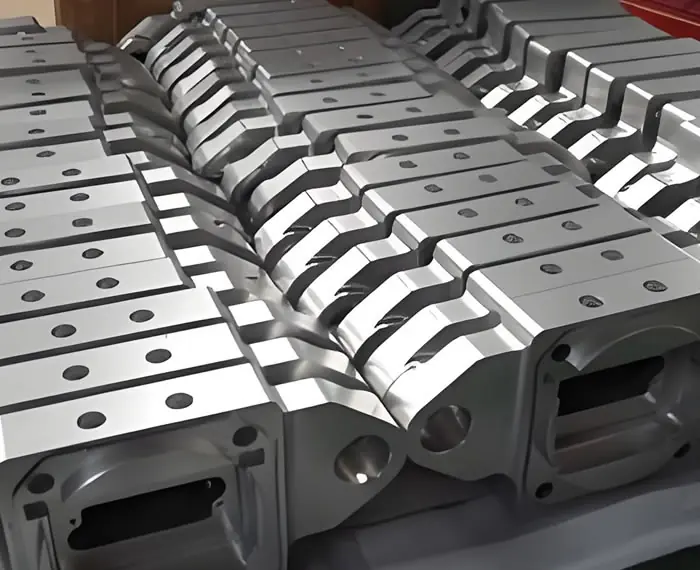
CNC machining offers almost unlimited material choices, making it ideal for cutting metals, plastics, ceramics, and composites.
In contrast, RP is somewhat restricted in material selection.
While RP technology has improved, allowing the use of metals, plastics, and ceramics, it still lacks the full range of material compatibility that CNC provides.
Size and Complexity of Parts
The maximum part size that RP can produce is generally limited to 600x900x500mm.
However, larger parts can be created by assembling multiple components.
CNC machining, on the other hand, can produce large and complex parts, even aircraft components, without such limitations.
When it comes to complexity, RP excels in manufacturing intricate designs with ease.
Any shape that can be designed in software can typically be produced with little to no impact on cost or production time.
CNC machining, however, faces restrictions due to tool limitations, requiring additional time and cost for complex geometries.
Accuracy and Repeatability
Accuracy is crucial for high-precision applications.
CNC machining boasts superior accuracy, typically between 0.0125mm and 0.125mm, compared to RP, which ranges from 0.125mm to 0.75mm. Additionally,
CNC machining ensures high repeatability, maintaining consistent quality across multiple production runs. RP, on the other hand, is more susceptible to environmental factors like temperature and humidity, which can affect consistency.
Surface Finish and Detailing
For applications requiring smooth surface finishes, CNC machining is the better choice, achieving a roughness average (Ra) of 0.5 to 5 microns. RP parts often require secondary finishing processes such as sanding or polishing to improve their surface texture, which can increase costs and affect precision.
Operational Requirements and Cost
RP has the advantage of requiring fewer skilled technicians, making it a cost-effective choice for prototyping.
The process is largely automated, requiring minimal human intervention.
CNC machining, however, demands highly skilled operators to manage tool paths, material selection, and quality control.
While this increases labor costs, it also ensures greater precision and reliability.
Production Cycle Time
RP technology can significantly reduce production time.
In many cases, a prototype can be completed within a day, making it ideal for rapid development cycles.
CNC machining, while not as fast as RP for initial prototyping, offers greater speed and efficiency for mass production, especially for parts that require high durability and mechanical strength.
Which Technology Should You Choose?
For businesses seeking high precision, material versatility, and repeatability, CNC machining is the ideal solution.
It is best suited for high-quality, production-grade parts that require detailed finishing.
However, if speed and design complexity are top priorities, RP is an excellent choice, especially for early-stage prototypes and conceptual models.
At Ningbo SAIVS Machinery Co., Ltd, we specialize in high-precision CNC machining and offer expert consultation to help businesses select the right manufacturing process. Whether you need durable industrial components or quick prototype development, our advanced machining solutions ensure quality, efficiency, and cost-effectiveness.
Contact Us Today
Ningbo SAIVS Machinery Co., Ltd
Address: NO. 626 Yuncai Road, Yunlong Town, Yinzhou, Ningbo, Zhejiang, China.
Tel: +86-574-88188161
Phone/WhatsApp: +86-13905748980
Email: seo1@saivs.com
Why Choose SAIVS™ as Your Supplier?
1.Superb Quality Control Management
At SAIVS, we take pride in our perfect quality management systems and procedures, which guarantees the excellent performance of all our producs, being a professional Investment Casting | Die Casting| Sand Castingmanufacturer in China.
2.Rich Production Experience
With 20 years of experience in production, SAIVS has a deep understanding of the market and trends, and strives for continuous research and innovation. This has created advantages in both the product's performance and appearance.
3.Competitive Prices
As a Chinese factory committed to becoming the most cost-effective Investment Casting | Die Casting| Sand Castingexporter in China, SAIVS provides high-quality products at advantageous prices. By lowering costs and increasing efficiency, we ensure that our customers receive the best possible value for their investment.
4.Perfect After-sales Service
At SAIVS, we strive to provide superior customer service that meets and exceeds expectations. We are always available for any questions or concerns you may have, and we stand by our commitment to providing excellent after-sales support.
Related Posts
-
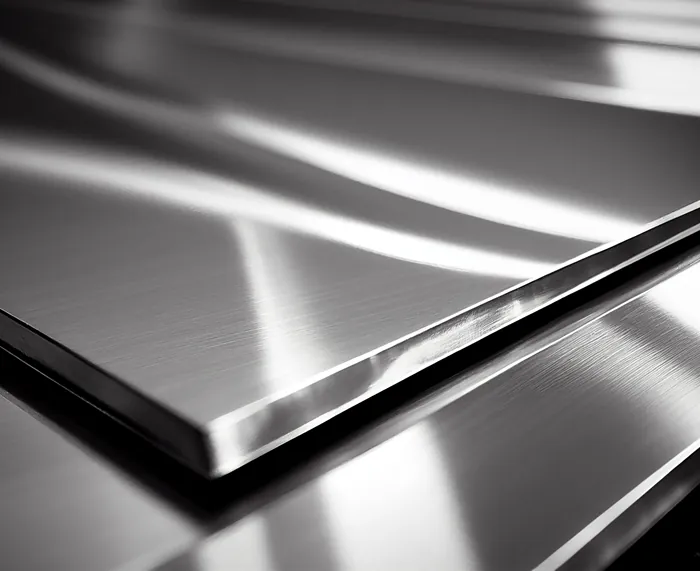
Why is Stainless Steel Difficult to Machine
In this article, we will explore the main reasons why stainless steel is challenging to machine, including high cutting forces and temperatures and accelerated ...
-

The Timeless Technique of Sand Casting: Past, Present, and Future
This article delves into the fundamentals of sand casting, its historical significance, technological advancements, material applications, and its future in hig...
-
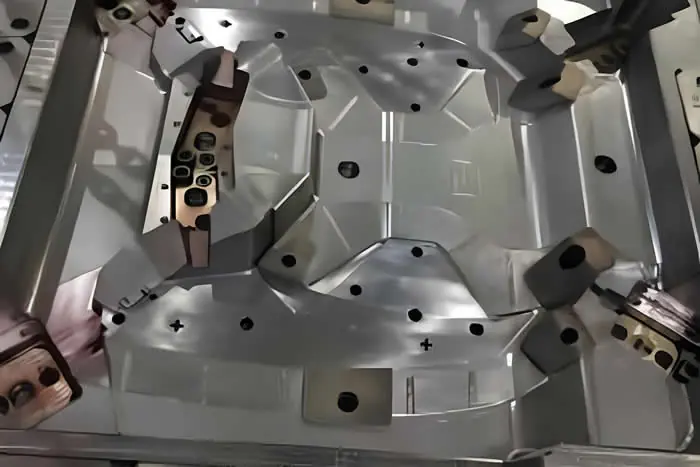
Why Multi-Station Progressive Dies Are Essential for Precision Metal Stamping
Why Multi-Station Progressive Dies Are Essential for Precision Metal StampingIn the field of modern metal manufacturing, the demand for high-efficiency, hi
-
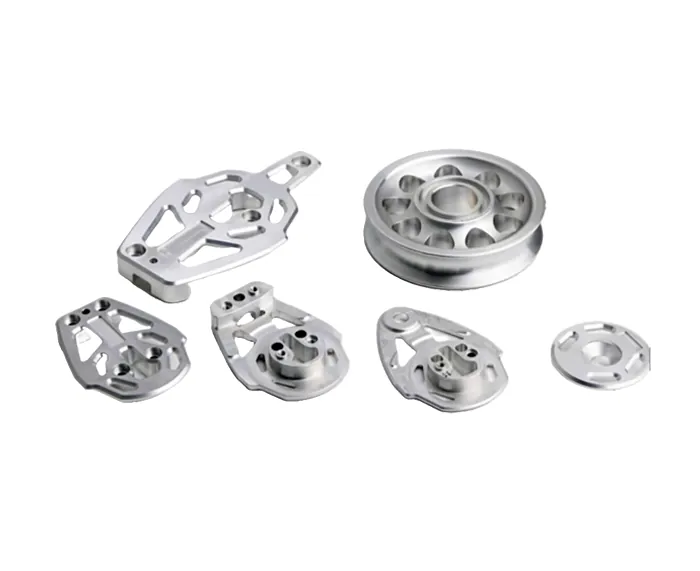
Unlocking Complexity: How CNC Milling Brings Intricate Designs to Life
From 3D design to the magic of milling, uncover the process and advantages, including high dimensional accuracy and efficiency.
-
Factors Affecting the Dimensions of Stainless Steel Castings
Learn about the factors affecting dimensional accuracy, including material expansion and deformation, and understand why choosing an experienced foundry like SA...
-
High-Precision Shell Die Casting with ProCAST Optimization
At Ningbo SAIVS Machinery Co., Ltd, we take pride in being a trusted and experienced manufacturer of precision aluminum die cast components, offering custo



