
Precision Casting Temperature Measurement and Control Technology
Author: SAIVS Date Published: Jan 16,2026
precision casting Temperature Measurement and Control Technology
In modern precision casting production, Temperature control is one of the most decisive factors affecting casting quality. Accurate temperature measurement directly influences dimensional stability, internal structure, and mechanical performance of cast components. For manufacturers supplying high-reliability parts, advanced temperature monitoring is no longer optional.
saivs focuses on providing precision casting solutions that help manufacturers achieve stable processes, consistent quality, and reduced production risks. By improving temperature measurement accuracy, foundries can significantly enhance productivity and product competitiveness.
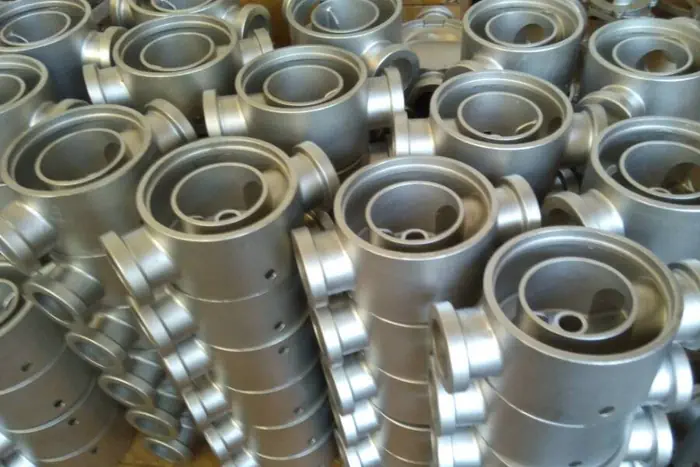
Why Metal Temperature Is the Core Process Variable
In precision casting, especially equiaxed solidification processes, molten metal temperature dominates the entire forming and solidification behavior. Any deviation in temperature can cause noticeable defects.
Improper temperature control may lead to uneven grain size, increased porosity, hot tearing, reduced mechanical strength, and incomplete filling of thin-wall structures. These defects directly reduce product reliability and increase rejection rates.
Stable temperature control improves casting consistency, lowers rework costs, and shortens production cycles. This is why professional foundries treat metal temperature as the primary control parameter.
Limitations of Conventional Temperature Measurement
Most precision casting facilities rely on non-contact infrared pyrometers for molten metal temperature measurement. While widely used, conventional pyrometers face significant challenges under real production conditions.
Instrument accuracy stated in technical manuals is often based on laboratory environments. In actual casting workshops, various uncontrollable factors introduce large measurement errors.
Key Sources of Measurement Error
Emissivity variation is the most critical issue. Molten metal emissivity changes with alloy composition, temperature, surface condition, and electromagnetic stirring.
Even small changes in alloy elements can cause large emissivity differences. This leads to temperature deviations of several hundred degrees when using fixed-emissivity pyrometers.
Additional errors are caused by gas emissions, observation window contamination, glass transmission characteristics, optical misalignment, and calibration drift.
Process-related factors such as unstable melting cycles, uneven heating, and poor matching between crucibles and induction coils further reduce measurement reliability.
Impact of Inaccurate Temperature Control on Production
When temperature readings are incorrect, control systems respond improperly. This often triggers repeated power on-off cycles in induction melting.
Electromagnetic stirring increases emissivity. Conventional pyrometers interpret this as overheating and reduce power.
Once stirring decreases, emissivity drops and the instrument reports under-temperature. Power is then reapplied, causing violent disturbances.
This unstable loop increases energy consumption, extends melting time, accelerates refractory wear, and introduces inclusions into cast products.
Advanced High-Temperature Spectrometer Technology
High-temperature spectrometer systems represent a new generation of non-contact temperature measurement technology. Unlike traditional pyrometers, these instruments do not rely on preset emissivity values.
By using multi-wavelength analysis and intelligent algorithms, accurate temperature readings are achieved even under changing surface and process conditions.
This technology provides real-time temperature data together with emissivity trends and signal quality information. These parameters help operators identify boiling, evaporation, or abnormal alloy behavior.
Process Stability and Quality Improvement
With accurate temperature feedback, melting power can be controlled smoothly without oscillation. Stable melting conditions reduce turbulence and prevent excessive electromagnetic disturbance.
As a result, castings show improved internal density, consistent microstructure, and enhanced mechanical performance. Thin-wall sections fill more completely, and surface quality improves.
Production efficiency increases while maintenance and inspection costs decrease. This directly improves overall manufacturing profitability.
Why Precision Foundries Choose SAIVS Solutions
SAIVS provides precision casting temperature measurement and control solutions designed for demanding industrial environments. The focus is on long-term stability, accuracy, and practical performance.
Our solutions help foundries reduce scrap rates, stabilize production cycles, and improve casting reliability. This creates a strong foundation for supplying high-end components to global markets.
By combining advanced temperature measurement technology with practical casting expertise, manufacturers gain better process visibility and control. This is essential for modern precision casting operations.
Conclusion
Temperature measurement and control are fundamental to precision casting quality. Traditional pyrometers struggle with emissivity variation and process disturbance.
Advanced high-temperature spectrometer technology overcomes these limitations and provides reliable data for stable control.
For foundries seeking consistent quality, reduced costs, and competitive advantage, investing in accurate temperature control solutions is a strategic decision.
Why Choose SAIVS™ as Your Supplier?
1.Superb Quality Control Management
At SAIVS, we take pride in our perfect quality management systems and procedures, which guarantees the excellent performance of all our producs, being a professional Investment Casting | Die Casting| Sand Castingmanufacturer in China.
2.Rich Production Experience
With 20 years of experience in production, SAIVS has a deep understanding of the market and trends, and strives for continuous research and innovation. This has created advantages in both the product's performance and appearance.
3.Competitive Prices
As a Chinese factory committed to becoming the most cost-effective Investment Casting | Die Casting| Sand Castingexporter in China, SAIVS provides high-quality products at advantageous prices. By lowering costs and increasing efficiency, we ensure that our customers receive the best possible value for their investment.
4.Perfect After-sales Service
At SAIVS, we strive to provide superior customer service that meets and exceeds expectations. We are always available for any questions or concerns you may have, and we stand by our commitment to providing excellent after-sales support.
Related Posts
-
From Wax to Metal: Unveiling the Art of Lost Wax Casting
This article will provide a comprehensive overview of lost wax casting, including its applications, suitable metals, wax types, and its relationship with invest...
-
Casting Defects: Understanding Causes and Solutions
Casting defects are common issues that occur during the metal casting process. These defects can affect the final product's quality, functionality, and
-
Grain Structure: The Touchstone of Sheet Metal Processing Technology
This article delves into the role of grains in sheet metal processing, the unpredictability of metal sheets, and proposes optimization strategies to improve par...
-
Why Multi-Station Progressive Dies Are Essential for Precision Metal Stamping
Why Multi-Station Progressive Dies Are Essential for Precision Metal StampingIn the field of modern metal manufacturing, the demand for high-efficiency, hi
-
Technical Requirements for Investment Casting
Throughout the production process, precision casting solidifies its liquid immediately at room temperature and pours the compound into its unique die casting di...
-
What to Consider When Choosing a CHINA-Based Factory for Customized Pump Body Investment Castings
Investment casting is a popular manufacturing technique used to create complex metal parts with high precision and repeatability. Pump body investment castings ...



